
Talks that Build: Exploring Communication Factors for Emerging Professionals in Product Teams
Preprint / Research Paper
Mixed-method research preprint examining communication dynamics and organizational factors in product design teams.

Exploring how client-side AI can support more accessible and human-centered communication technologies.
I am a computer science graduate and aspiring researcher exploring the intersection of AI, human-centered interaction, communication, and responsible technology. My work focuses on accessible and privacy-preserving AI systems through projects involving client-side AI, adaptive learning tools, FERPA-focused systems, and interactive user experiences. Through research, leadership, and community initiatives, I combine technical development with communication, design thinking, and social impact. My goal is to advance human-centered AI that improves accessibility, education, and the way people interact with technology.


Major • Berea College • CGPA: 3.56
Focused on AI systems, software engineering, computer security, and human-centered computing with an emphasis on client-side and privacy-preserving technologies. Coursework and research explored accessible AI systems, adaptive educational tools, computational modeling, and interactive technologies designed to support human communication and user autonomy.

Major • Berea College • CGPA: 3.56
Focused on communication theory, storytelling, intercultural communication, journalism, and public discourse. Academic work examined how communication shapes human interaction, accessibility, ethical technology design, and the societal impact of digital systems, reinforcing interests in human-centered AI and communicative technologies.

Santa Clara University
Participated in a Silicon Valley startup and innovation program centered on entrepreneurship, emerging technologies, collaboration, and product development. The experience strengthened my interest in building human-centered technologies that connect technical innovation with accessibility, communication, and real-world social impact.
Research Focus
Exploring how client-side AI can support more accessible and human-centered communication technologies.
Selected research outputs, conference presentations, workshops, and publications. Full research details are available in the Research Experience section.
Preprint / Research Paper
Mixed-method research preprint examining communication dynamics and organizational factors in product design teams.
TEI Conference — University of Chicago
Explored tangible interaction research through workshop attendance and prototype reconstruction.
SASE Connect National Conference
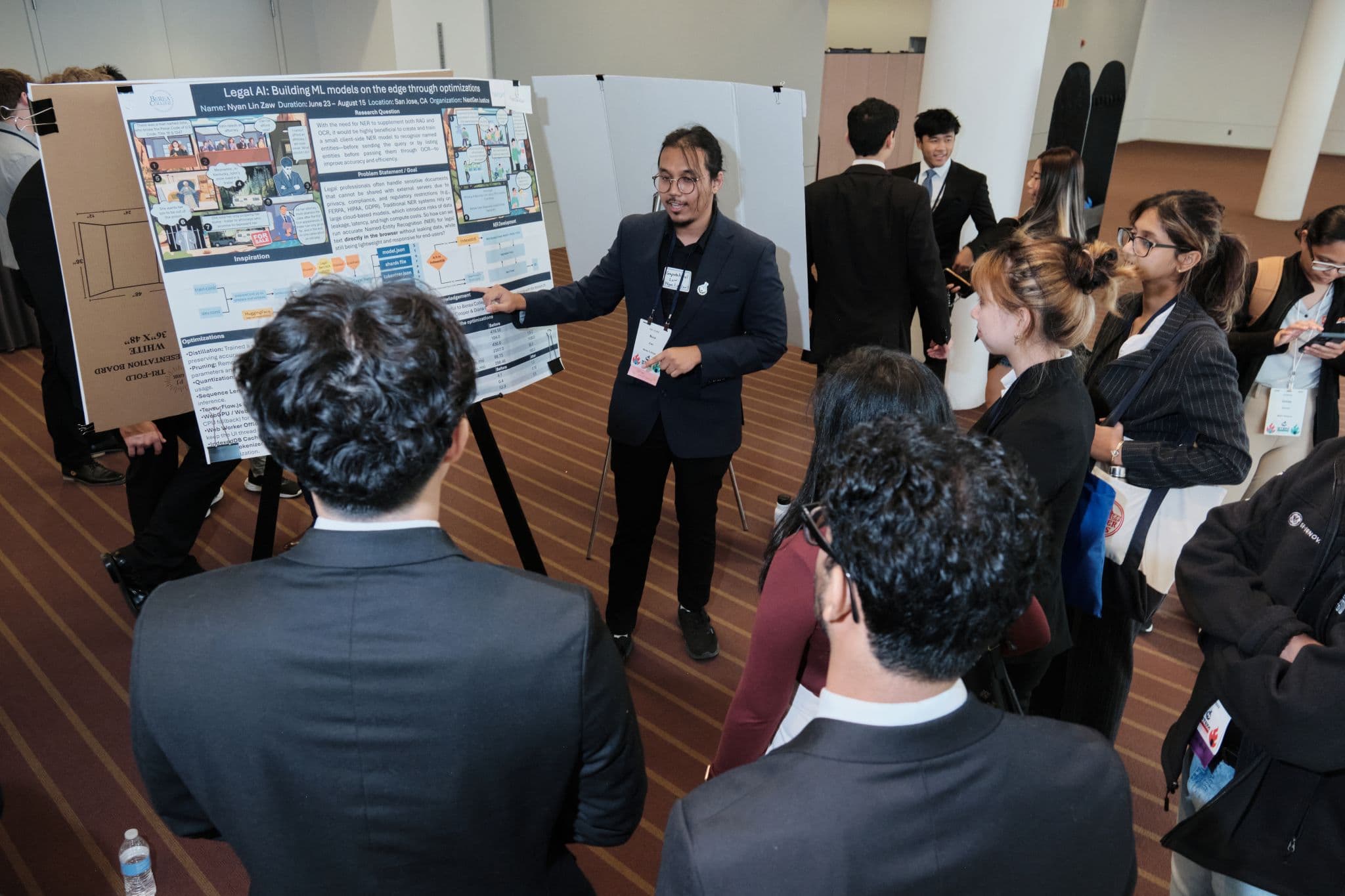
Presented research on browser-based AI optimization for privacy-sensitive legal applications.
Kentucky Conference on Health Communication
Presented collaborative qualitative research on culture, identity, and healthcare communication.
Research outputs, presentations, workshops, and academic experiences that shaped my work in AI, HCI, communication, accessibility, and human-centered technology.
ACM-TEI Conference — University of Chicago • Research Expo — Berea College


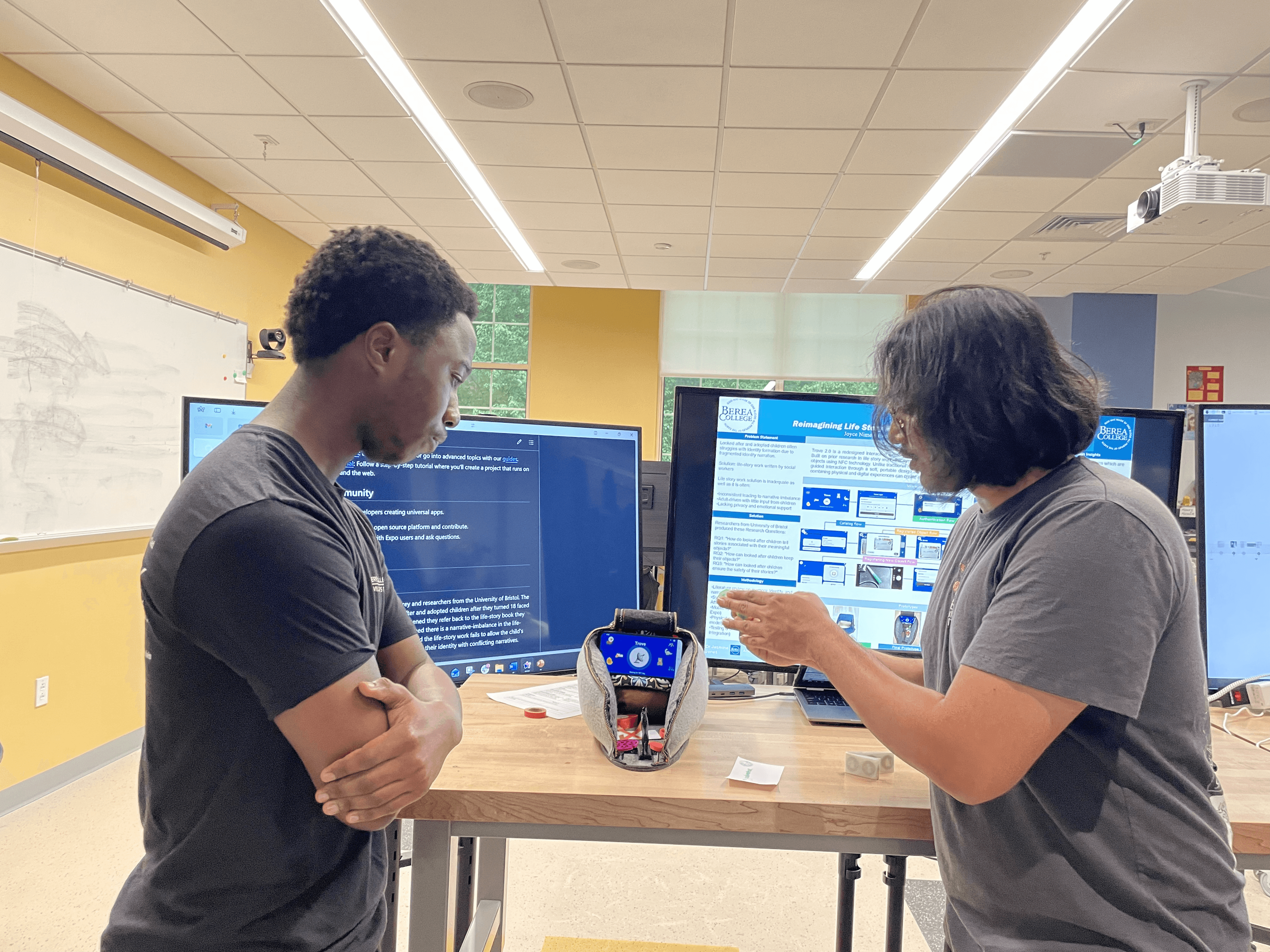
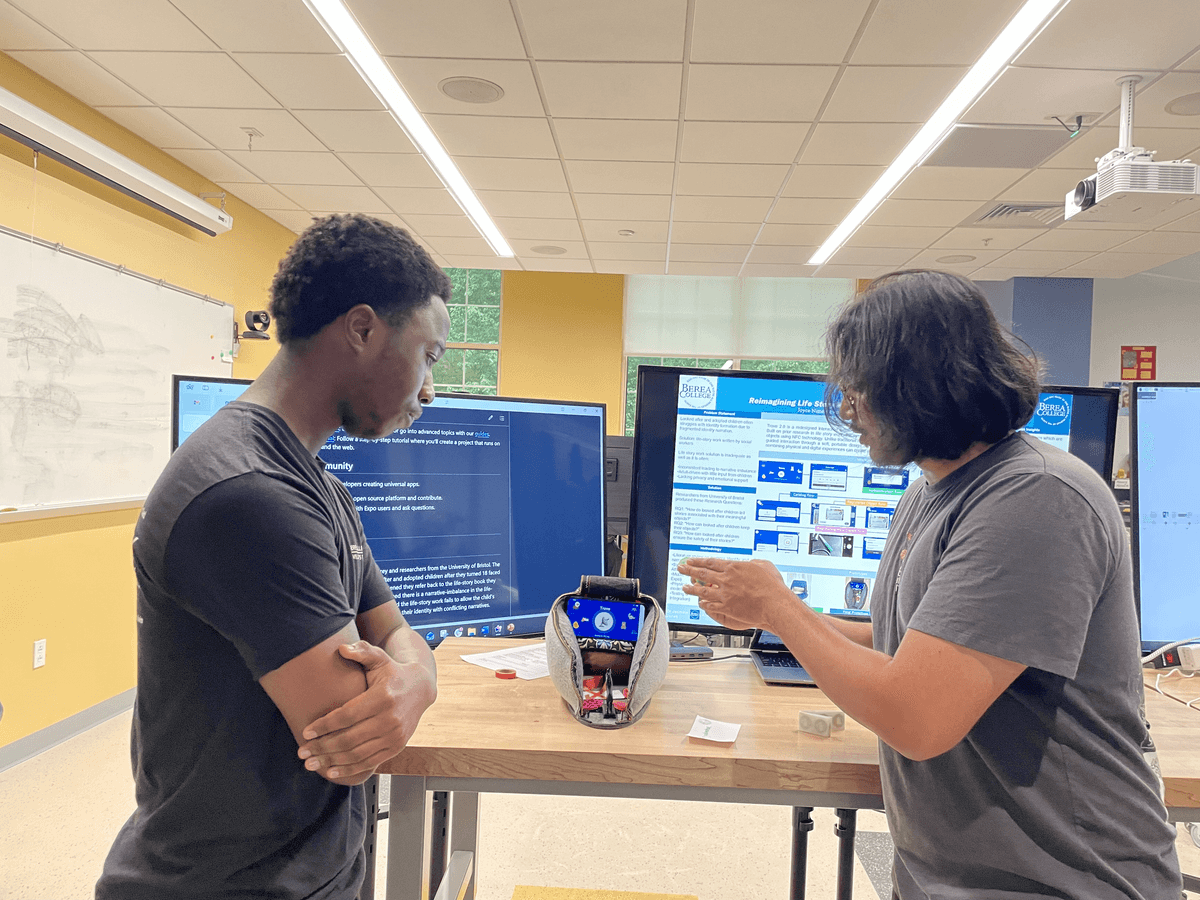
This project is not an original research contribution, but a research reconstruction inspired by the paper 'Trove: A Digitally Enhanced Memory Box for Looked-after and Adopted Children' presented at the ACM Conference. By closely analyzing the publication, interaction concepts, and system behaviors described in the paper, this project reverse engineered and translated those ideas into a functional prototype to better understand tangible interaction design, storytelling systems, and human-centered technology.
Timeline, methodology, contribution, impact, and evidence
Research Paper Analysis
Interaction Breakdown
Concept Reconstruction
System Translation
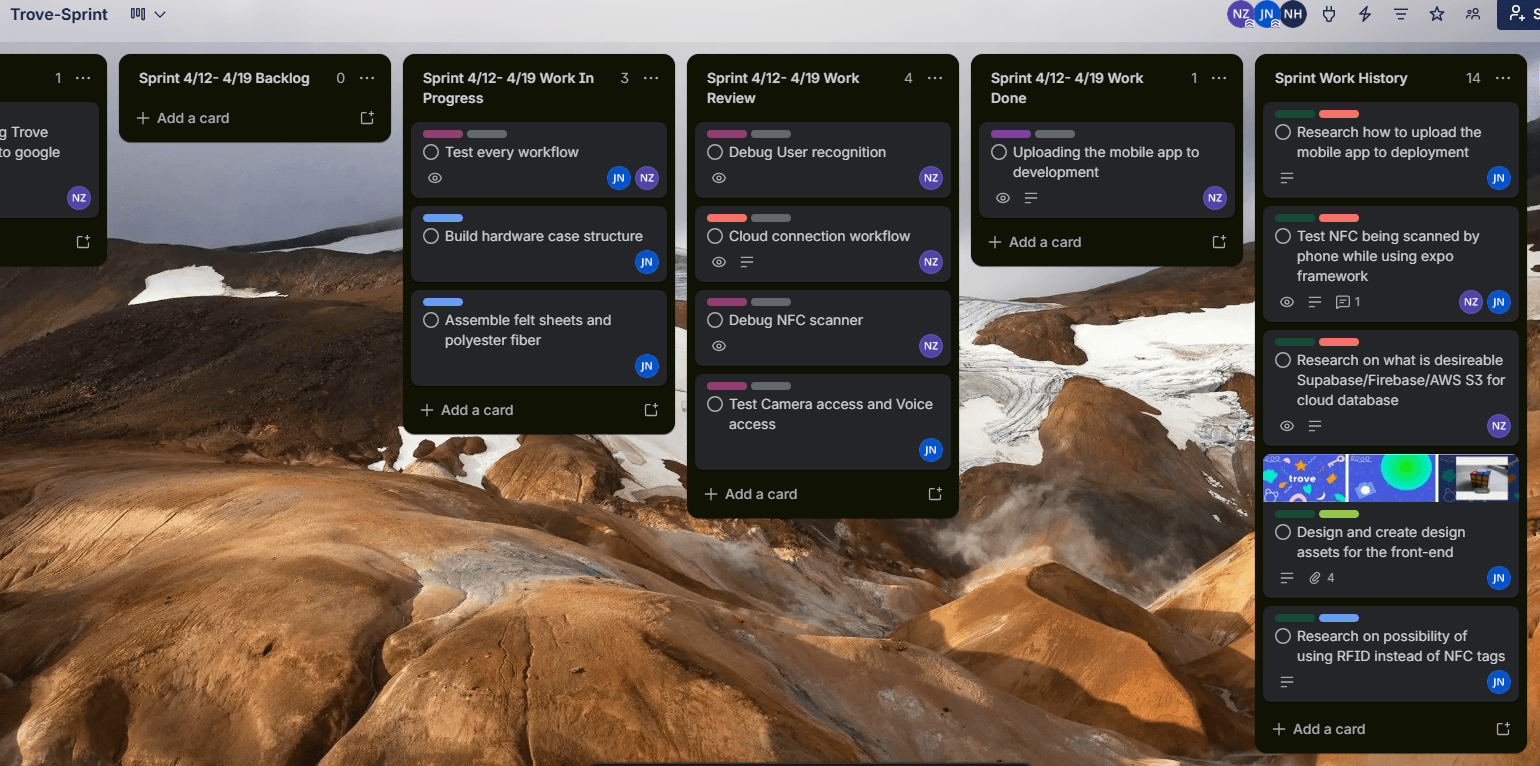
Prototype Development
How can the interaction concepts described in tangible interaction research papers be reconstructed into a working digital prototype?
Affinity mapping, Interaction decomposition, functional flow analysis, user-flow reconstruction, sprint planning, UI/UX translation, implementation experimentation, low-fidelity prototyping, high-fidelity prototyping.
Human-Computer Interaction (HCI), tangible interaction, narrative technology, research-to-prototype translation.
Published research papers, workshop observations, interaction examples, system descriptions, and design documentation presented within the original TEI research materials.
Rather than proposing a novel research contribution, this work focuses on reconstructing and translating an existing HCI research concept into a functioning prototype as a learning and exploratory exercise.
Demonstrates the ability to critically analyze academic research, extract interaction principles, and transform theoretical descriptions into an implemented interactive system.
ArXiv Preprint


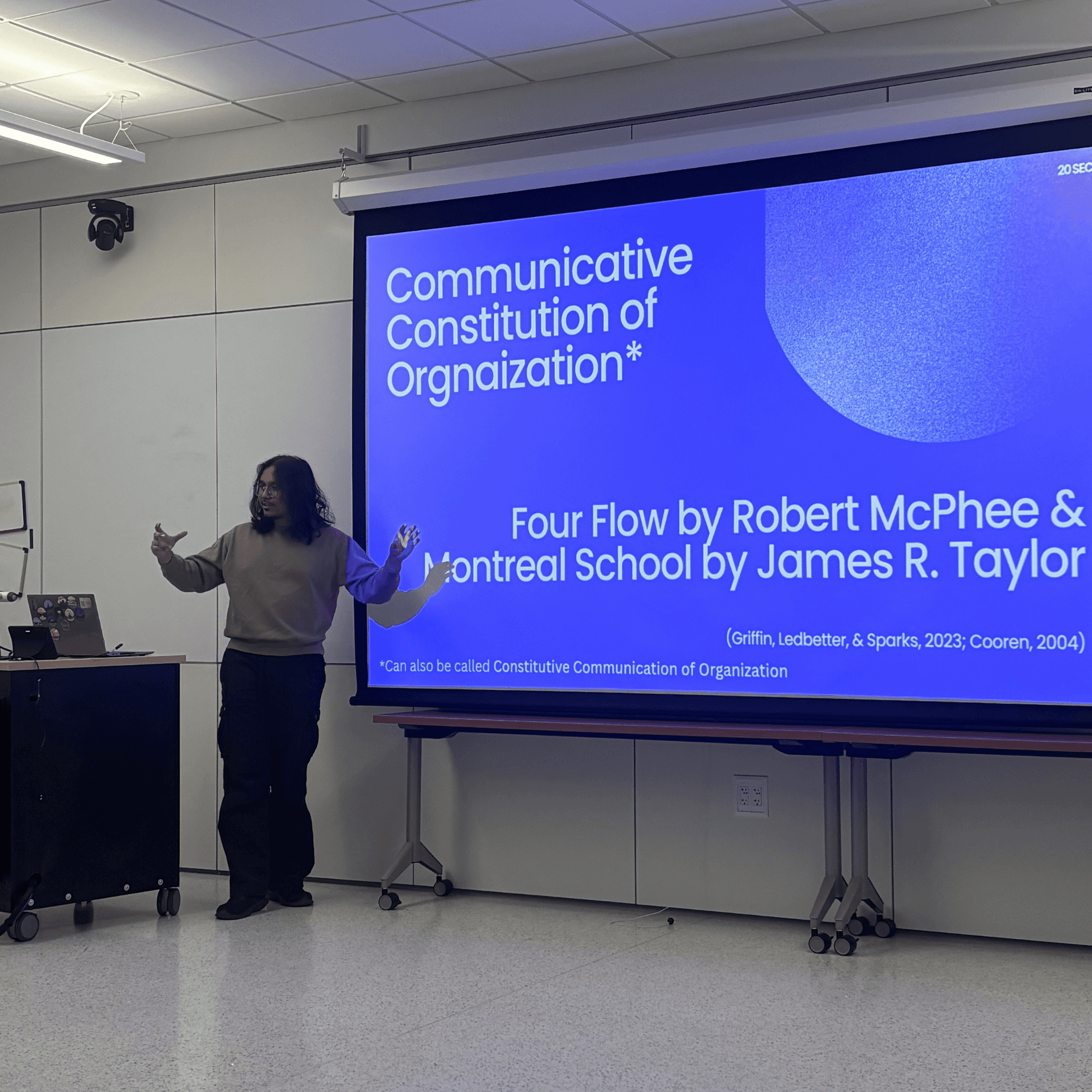
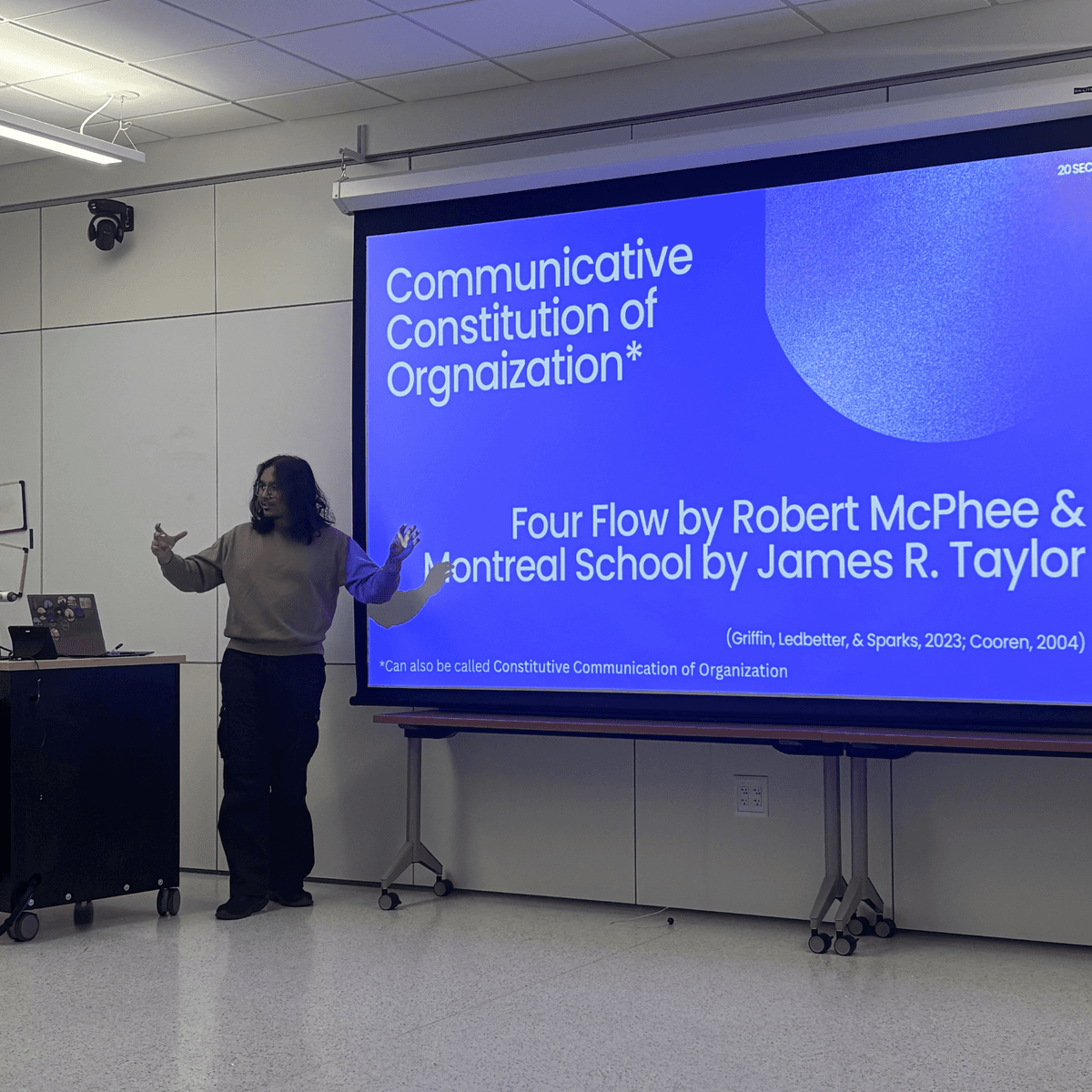
This research explores how communication shapes the success of emerging professionals in product design teams, finding that curiosity, inclusivity, documentation, and accessible communication are more important than prior experience. Using surveys and interviews, the study shows that flexible communication structures and supportive team environments help younger professionals overcome challenges like high turnover, limited experience, and context switching.
Timeline, methodology, contribution, impact, and evidence
Research Proposal
Research Conduct
Thesis Defense
Preprint Draft
What variables and strategies within a product team influence the success of a product when the team includes emerging professionals?
Phonetic Iterative Qualitative Data Analysis, Thematic coding
Communicative Constitution of Organization
Opportunistic, snowball sampling, textual analysis, survey (n=45), interview (n=6)
Connects organizational communication theory with product team collaboration and early-career professional development.
Strengthened my research direction around communication systems, collaboration, and human-centered technology teams.
SASE Connect National Conference — Society of Asian Scientists and Engineers


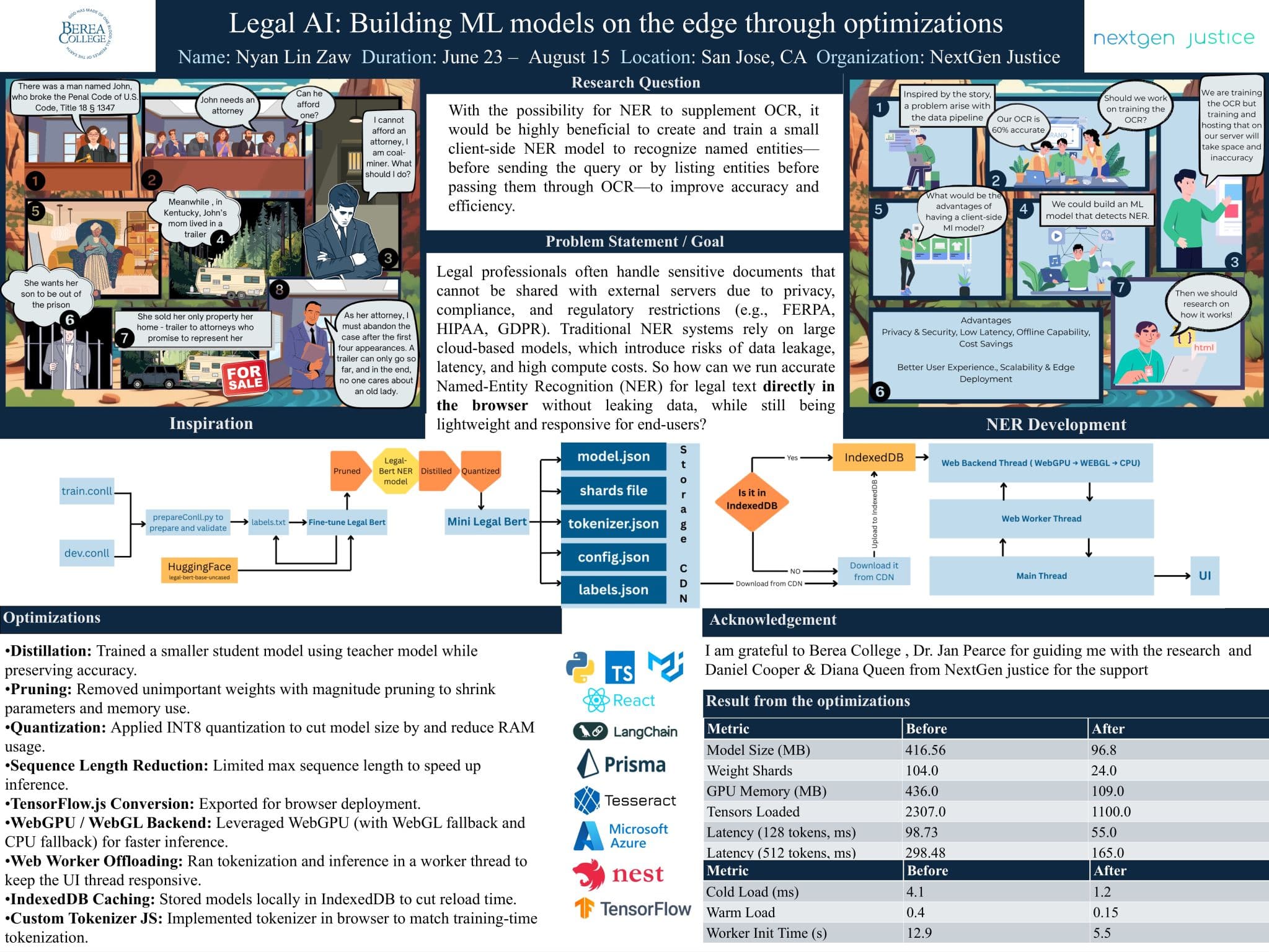
This research explores how AI/ML systems can be optimized to run entirely on the client side for privacy-sensitive legal applications. Using TensorFlow.js and a browser-based LegalBERT NER pipeline, the research investigates pruning, quantization, distillation, caching, and architectural optimization strategies to reduce memory usage, improve inference speed, and maintain responsive user experiences within browser constraints.
Timeline, methodology, contribution, impact, and evidence
Legal Workflow Research
Client-Side NER Exploration
Optimization & Pruning
Experimental Benchmarking
SASE Conference Presentation
How can transformer-based AI/ML systems be optimized to run efficiently within browser environments for privacy-sensitive legal workflows?
TensorFlow.js experimentation, LegalBERT optimization, pruning, quantization, caching, and browser performance testing.
Client-side AI, edge ML, browser-based NLP, privacy-preserving systems.
Browser benchmarking data including inference speed, memory usage, model load time, UI responsiveness.
Explores browser-native NLP systems as a privacy-preserving alternative to server-side AI pipelines.
Demonstrates the feasibility of deploying optimized transformer-based NER systems directly within browser environments, reducing reliance on centralized infrastructure while improving privacy and accessibility for legal-sector AI workflows.
Kentucky Conference on Health Communication


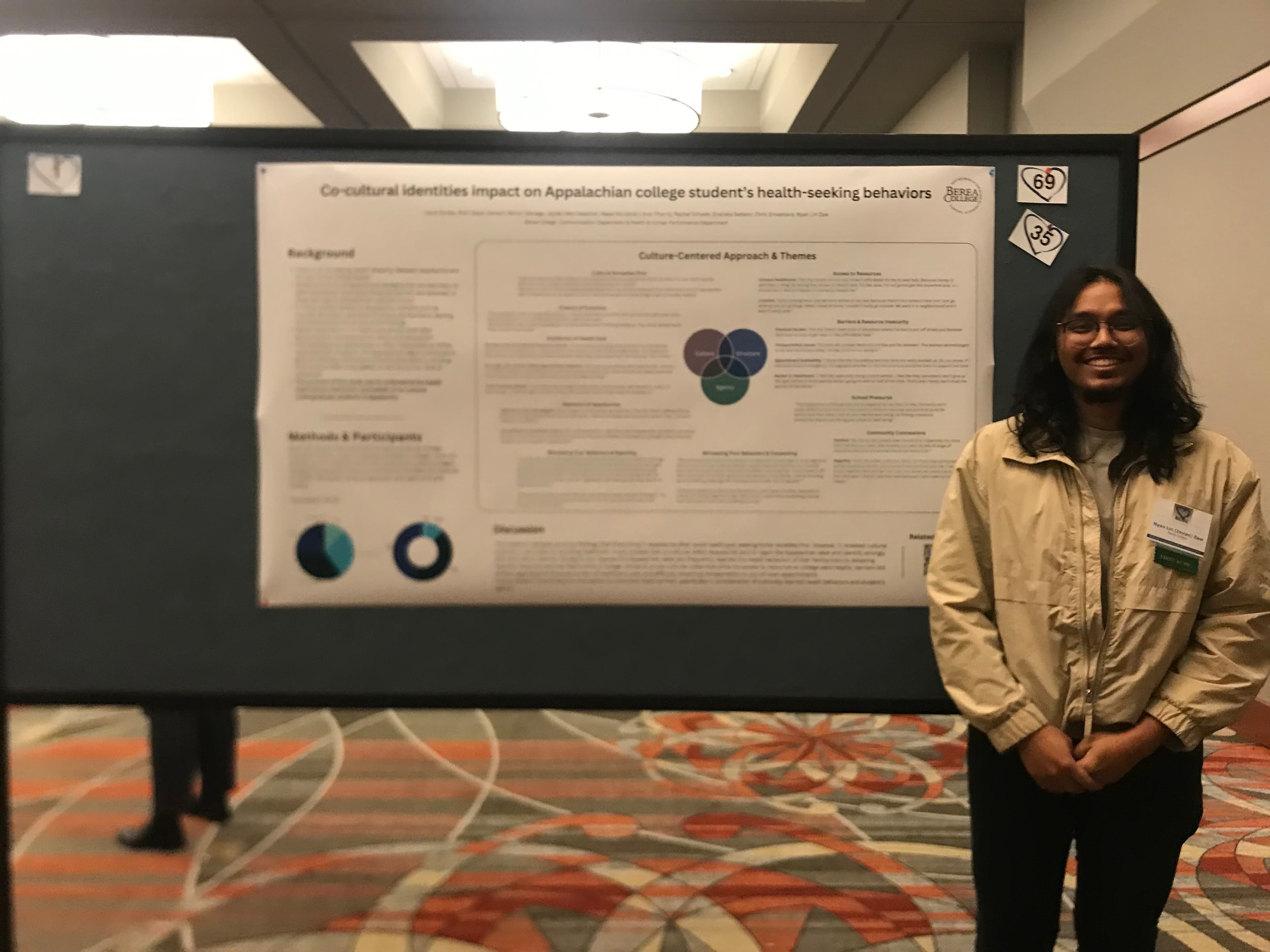
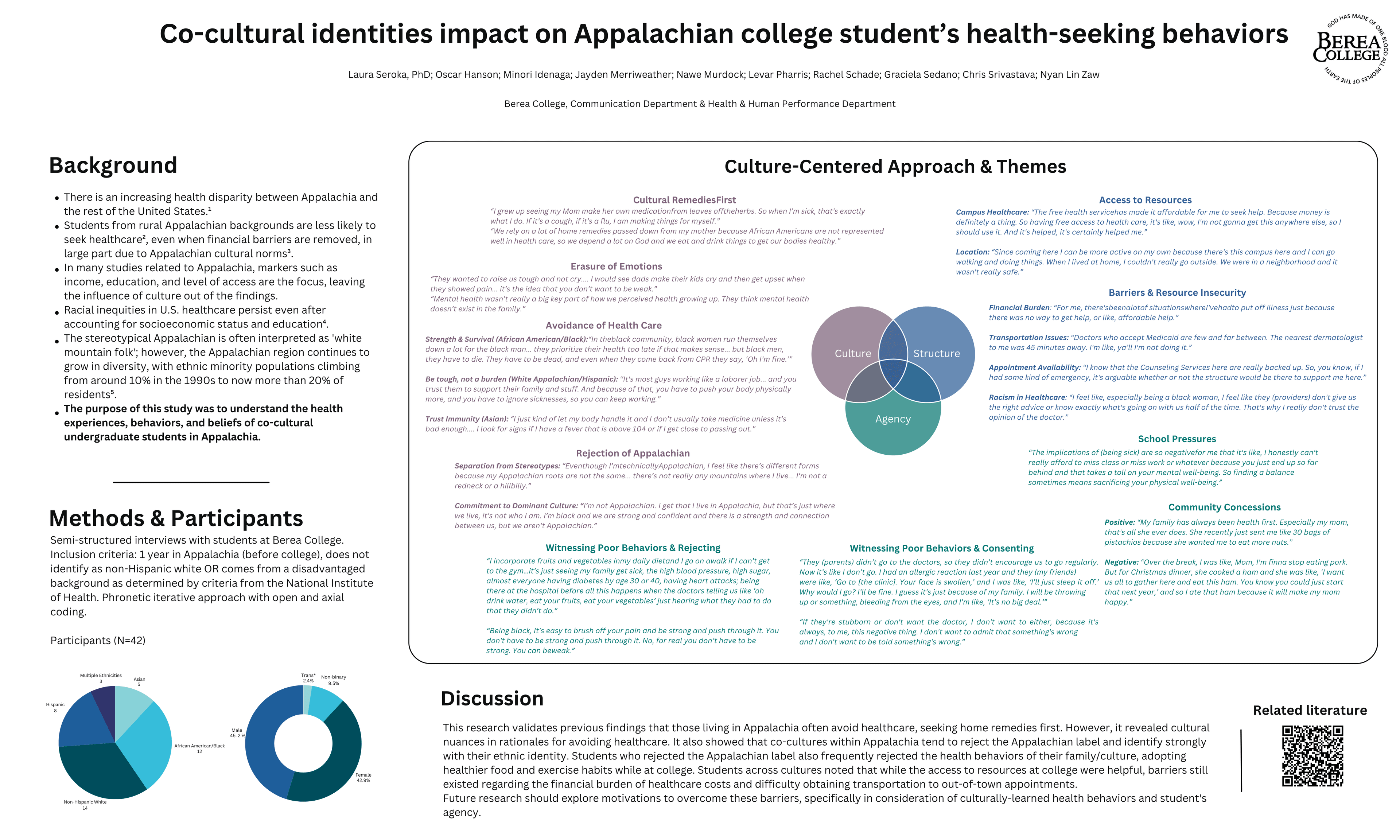
Collaborative qualitative research exploring how co-cultural identities and Appalachian cultural norms influence healthcare-seeking behaviors among college students.
Timeline, methodology, contribution, impact, and evidence
Literature Review
Qualitative Research
Thematic Analysis
KCHC Presentation
How do co-cultural identities influence Appalachian college students’ health-seeking behaviors?
Literature review, criterion sampling, qualitative interviewing, thematic coding, communication analysis.
Health communication, co-cultural theory, Appalachian identity, sociocultural healthcare behaviors.
Qualitative interviews and surveys examining healthcare perceptions, communication patterns, treatment-seeking experiences.
Examines the intersection of co-cultural identity and Appalachian healthcare communication within a college student population.
Expanded understanding of culturally informed communication, accessibility, socially sensitive information delivery.